

If You See a Demon
Finding yourself in art, finding yourself in the world of ten thousand things.

Dear Friends,
I’m back from this summer’s silent retreat, stepping into ordinary life again. Whoah!
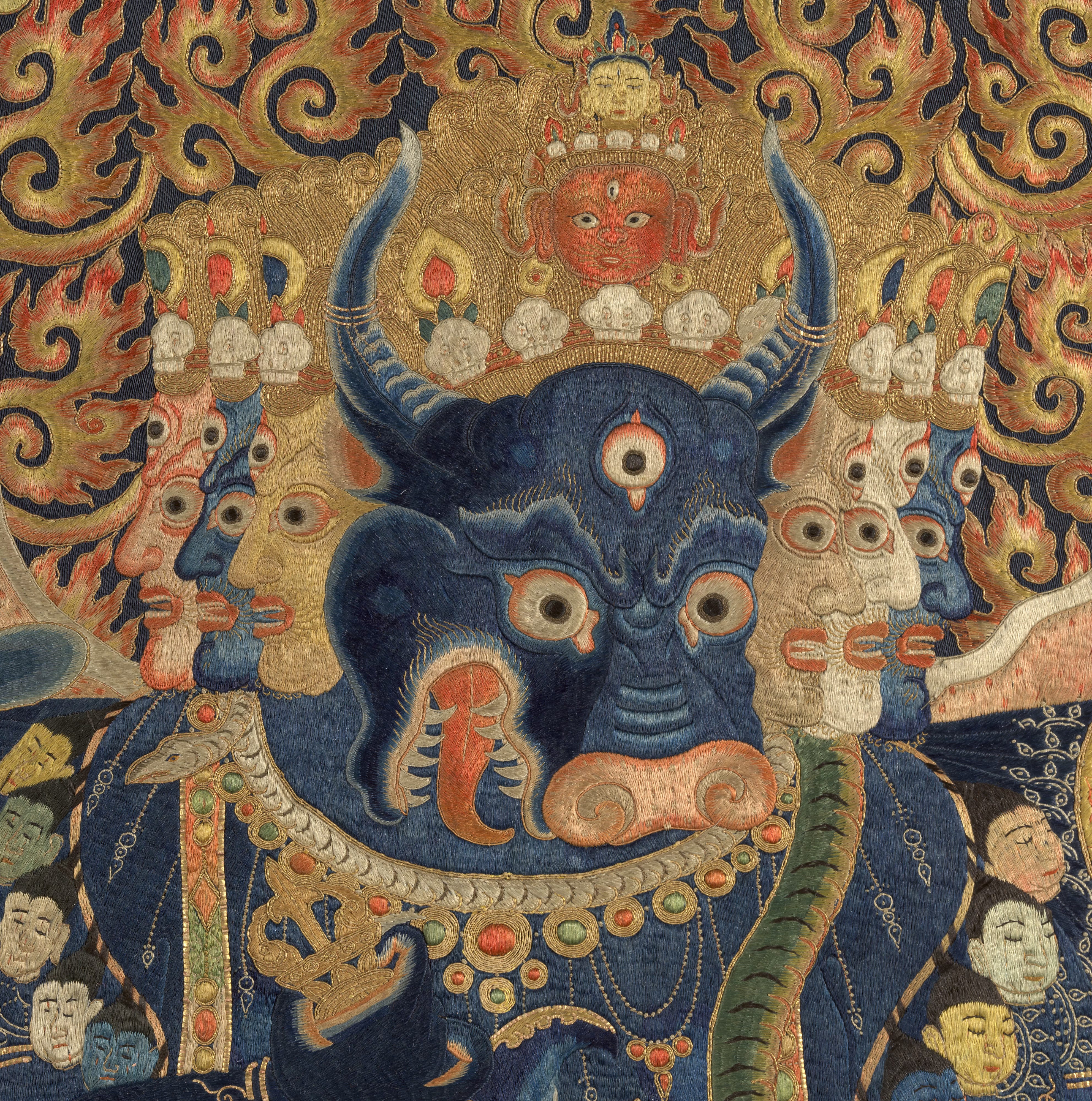
It was an intense time for for me, as you’ll see from this talk I gave at the retreat, in which I encounter myself in the form of a demon, in the form of a painting, and in the form of a hermit-nun.
Also! I’ll share more about this next week, but I’m thrilled to be teaching an upcoming class with the amazing Sarah Kokernot: “More Than Seeing: Writing from Art” on Thursday August 27 (online). Full information & registration here.
— Sal
Where Are You?
Where are you?
Where is your body? Where are your thoughts? Where is your heart?
When are you? Are you in the past, in the future, in the present? Or in some place in time that is not any of those things?
You might think from my question that this is going to be a Be Here Now talk, that I’m going to exhort you to gather yourself thoroughly into the present moment. Instead, it’s something of the opposite. What I want to talk about is how we recognize ourselves in the world, how there are moments when we suddenly see that something we thought was outside of us was actually inside.
If You See a Demon
On the first full day of last week’s sesshin I found myself in an inner storm, a terrible whirlwind of emotion, a tornado of debris whipping around me. As usually happens for me in these kinds of storms, I was absorbed in the stories, characters, and situations that seemed to trigger all of this emotion, quite caught up in them.
Then I remembered something I had seen a few weeks ago, a short clip of a Zen (Chan) Buddhist nun speaking. She was living in a hut in China’s Zhongnan Mountains. This is what she said:
If you see there’s a demon, that demon is your own Mind-Demon! It’s not something “out there.” Don’t cling on to it. Don’t… Don’t fear it, don’t hurt it. You sit, grounded in wakeful stillness as if it’s not there at all. In the end, the demon becomes your protector. If you grab hold of that demon, it will take you over completely. If you don’t react, it can’t manipulate you. In fact, it will help you.
When I thought of her words, I saw my emotional storm as the kind of demon she was speaking of. It had many heads: anger, fear, self-righteousness, a very large, central head of grief which was weeping continuously. And there was one small head, dark and tarry and mysterious, which I had no name for but whose scent I somehow recognized.
The nun talked about these demons as Karmic Obstructions, meaning that they come from the past. Maybe the recent past, maybe the distant past. When she said the word obstructions I thought of the way that in Zen we often speak of barriers or gates. I thought of the Mumonkan, the Gateless Gate, or the No-Barrier Barrier.
The instructions in these texts are very clear: when you meet a barrier or a gate like this, you must become the gate. Or, more accurately, recognize that the gate is you. When you are one with the gate you can then move freely.
So I had to recognize the demon as myself.
The nun went on to say, “Examine yourself. Investigate yourself.” This reminded me of Dogen frequently saying “you should investigate this thoroughly.” Investigate it for yourself. In this case, investigate yourself for yourself.
The nun said: “Sit quietly, face up to who you are.”
So.
With the nun’s help, as I sat, something in me shifted.
In fact, without me quite seeing its sleight of hand, I believe the demon slipped me a key to my own koan practice. Something opened.
The Solitary Angler
This brings me to the koan I’d like to talk about, “Kodo: The Solitary Angler,” from our study text, The Book of Householder Koans by Eve Myonen Marko and Wendy Egyoku Nakao.
When we see something of ourselves in the world it’s not just the dark aspects of ourselves we see, but also what we might think of as the brighter aspects.
Kodo, who was a Black woman and a suburban housewife, was sitting in her favorite chair turning the pages of an art book. She saw a painting by the Thirteenth-Century Chinese painter, Ma Yuan, called The Solitary Angler, and thought “That’s me!.”
It was her, but it was also not her. There was something in the painting that called to her, across space and time and cultural difference. She recognized a self that she could be, or wanted to be, or was becoming.
In the authors’ reflection on the koan they say: “Maezumi Roshi, often instructed us to close the gap between who you think you are and who you truly are. ‘Close the gap,’ he would say, ‘between the Self and yourself.’”
In some sense, Kodo was already what she sensed or saw in the painting, but didn’t fully know it yet.
Naturally, when I read this, I looked up the painting.
That first time I saw it, I thought Oh! yes. I saw why it moved her.
For a few days I carried the image of the painting in my mind. This is how I remembered it. The background was a flat, luminous golden field—that was the lake. It looked as if the water had swallowed the evening sun like the yolk of an egg and been completely saturated with its color. In the foreground was the boat, which I saw as a black silhouette, almost an abstraction where the curve of the boat and the boatman melded together. It was as if a thick crescent moon, somehow dark and crusty, had fallen into the lake and floated there.
I had been looking at the painting on my phone, so what I saw was about the size of a postage stamp. When I went back, days later, to look more closely, I was completely surprised.
The field, which I had seen as golden yellow, was actually brown, a deep tan, Perhaps the color of the aged silk on which the work was painted. The boat and fisherman were not a silhouette at all, but were filled with rich detail. Enlarging parts of the image, I could see the fisherman’s face, angular with dark eyebrows and a black beard. He was looking over the end of the boat intently, as if he expected the fish of enlightenment to leap out of the water at any moment. You could also see his fishing rod with its line curving gracefully into the water.
The rod had a mechanical reel, which surprised me. Later I learned that this painting was thought to be the first-ever depiction of a fishing reel.
Behind the fisherman was a woven object on the boat. I didn’t know whether it was a shelter that the fisherman could slip into if needed — it wasn’t large — or if it was a basket to hold his catch. On top of this was his hat, also woven of reeds, with a generous, round brim.
So there were two versions of the painting, two experiences of it that I had and carry within me. I feel sure that Kodo had a third, unique experience of it. I don’t know exactly what she saw in the painting that she recognized, what details were important to her seeing, but something in the painting called to Kodo.
Strangely enough, it was her own self.
Calling
When I think of my own calling into Zen it feels something like a great force or motion, like a wind, or an ocean current, or the pull of gravity. I don’t even know if I’m being pushed or pulled, but I am being moved towards something. The sensation is of something much larger than myself, something vast and impersonal. The wind doesn’t care at all about my preferences. It doesn’t care if I don’t like to get up early, or if I have a pain in my back or my knee, not any of it.
Sometimes I feel like a leaf, carried on that wind, or like a pebble dropped from a high cliff, just falling.
This brings me back to the nun. The reason I could remember her words was that I had watched the clip many times. I was struck by her. She was in hut she had built on the mountain. It was quite dark inside. You could see her cooking pots, very well scrubbed, to one side of her, and on the other were bundles of fallen wood that she had gathered.
She was neither young nor old. Her face was lit only by the open doorway of the hut. She was speaking to the filmmaker but he didn’t appear in the frame.
The clip I mentioned was from a film by Edward A. Burger, a Buddhist documentarian who has been working for many years in China. This film, The Mountain Path, follows his journey into the Zhongnan mountains in search of Zen hermits who are living there in the present day.
I will admit now that I am very drawn to the practice and life of these hermits, especially the nun from Guangdong. (No one in the film offers their real names, perhaps because the government isn’t especially welcoming of their way of life, so we only know her as “the nun from Guandong”).
I am, as you might say, hermit-curious. Or hermit-questioning.
I have felt this way for some years, though I haven’t done anything about it. It certainly would cause difficulties in the life I’ve been leading.
In our tradition there are three ways to deepen your practice. The monastery, which is basically what we are doing on sesshin, the pilgrimage, and the hut, which we don’t talk about much.
The Zen Poet Ryokan
I think this curiosity or calling started for me some years ago when Tokuyu Sensei gave a talk at the Grail one summer about the Zen monk-poet Ryokan.
Ryokan lived in the seventeen-hundreds. He was ordained as a monk, but left the monastery to dwell in a succession of solitary huts. He wrote poetry, practiced calligraphy, played with the village children, and led an idiosyncratic life. In Japan he’s hugely famous both for his poetry and for the stories about him.
One of the stories I love is that on warm days he would leave his hut and find someplace to sit in the sun. He would carefully take the lice from his robes and set them out to enjoy the rays. When it was time to go back inside, he would collect them and put them back on his robes.
One day a child came to Ryokan with a piece of paper, and wanted him to write something on it. Ryokan asked what the paper would be used for, and the child said, “A kite! Write something that will make it fly well!” So Ryokan wrote a poem which is my favorite of all his poems. It’s just four words.
Sky above.
Great wind.
He wrote his poem using some of the first characters a child would be introduced to when learning to read and write. At the time, I was learning kanji as well, and when I looked at Ryokan’s calligraphy I could actually read it! It was my first, and possibly my only, experience of really reading Japanese.
And maybe I wanted to be like the kite, flying in that great wind, rather than being blown around like a leaf or plummeting like a pebble.
But it is also honorable to be pebble or a a leaf.
Ryokan last poem, his death poem, goes like this:
Now it reveals its hidden side
and now the other—thus it falls,
an autumn leaf
The Storm
I want to close with a poem of Kazim Ali’s from his new book, The Man in 119.
I’m going to read the poem twice, with another poem in between. It’s just six lines.
The Storm

After the storm came in, broke the dishes
We found the wound, there, deep, where it’s always been
You in your “otherwise life” never renounced desires
The silvery storm will tire you out
Just lie down until you remember
I’m here, not-here, mine, and empty-
I especially love that last line. It seems both clear and mysterious. It has something of the the aesthetic quality of yugen that Torei mentioned in her talk. It also reminded me of another Japanese aesthetic term, ma, which means a kind of space or gap into which we can be drawn.
Kazim’s poem seems to be in conversation with many of the things that have come up this week. The storm, and also the wound. On the first day of our time here, our Shuso, Enmei, spoke about the wounds we bring with us — our personal wounds and also the wounds of the larger world that we carry. And being tired! And the states of being both present and empty.
It also reminded me of a poem that Suman shared last week. Suman, who took Jukai, is now Kiryu, Bright Stream. After she shared it, I asked her to write the poem out for me, and this is the way she wrote it. It is by the great Sufi poet, Hafiz:
Just sit there.
Don’t do a thing.
Just rest.

For your separation
From God.
From Love.
Is the hardest work of all.
So now that all that is in our ears, let’s look at Kazim’s poem one more time:
The Storm

After the storm came in, broke the dishes
We found the wound, there, deep, where it’s always been
You in your “otherwise life” never renounced desires

The silvery storm will tire you out
Just lie down until you remember
I’m here, not-here, mine, and empty-
Tell me about where you see yourself these days.
The Nun from Guangdon

You can watch Edward A. Burger’s interview with the Nun from Guandong here.
Edward A. Burger’s full documentary, The Mountain Path, is available on Youtube.
Ma Yuan, The Solitary Angler
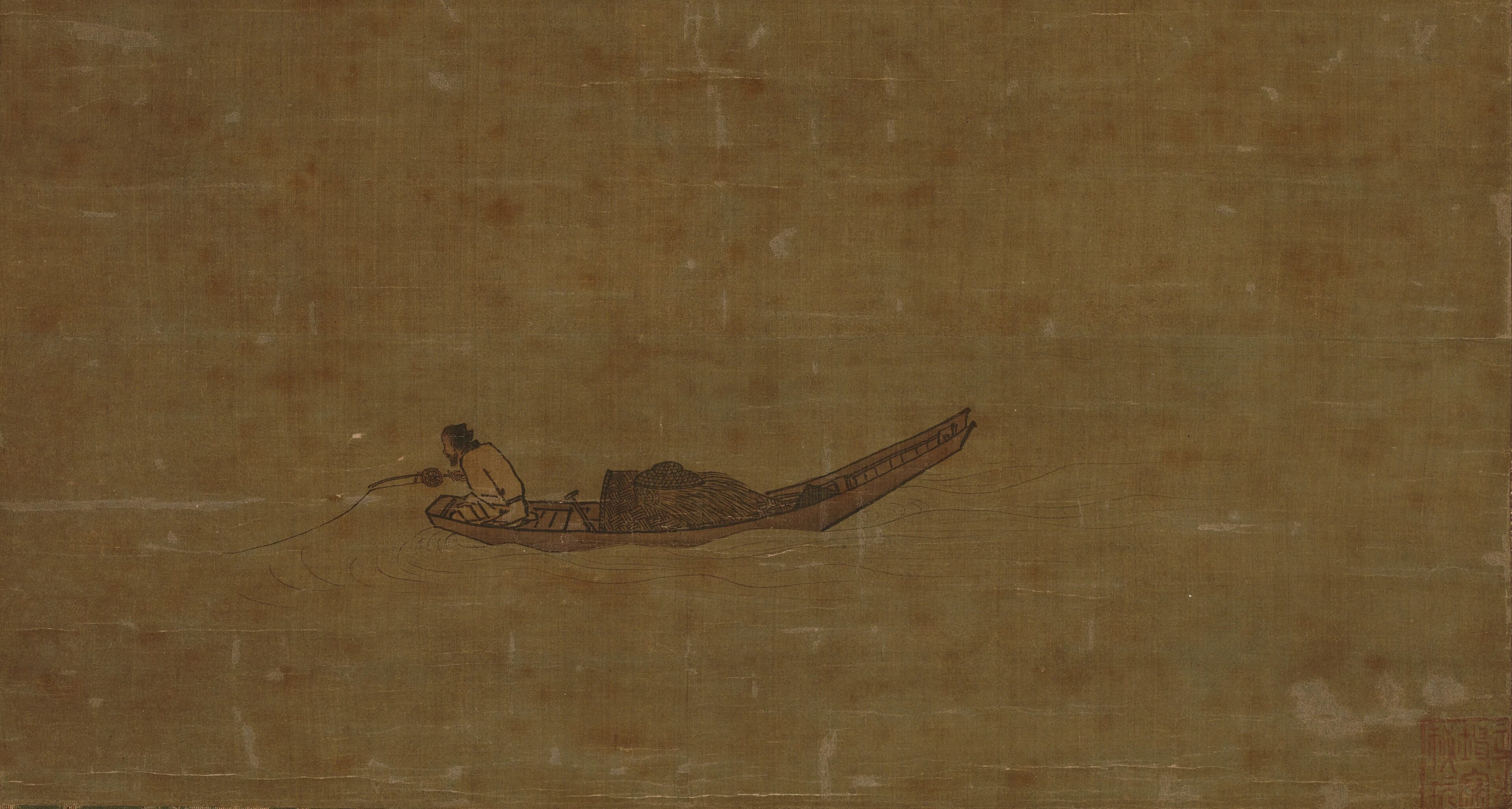
From the Tokyo National Museum
Solitary Angler on a Wintry River
The image of a lone fisher on a boat such as this symbolized an ideal state of seclusion conceived by Chinese scholar-officials. With vast blank spaces, this work was initially praised for its poetic feel, but is now deemed that it was deftly cut out from a larger work.
Kazim Ali, The Man in 119
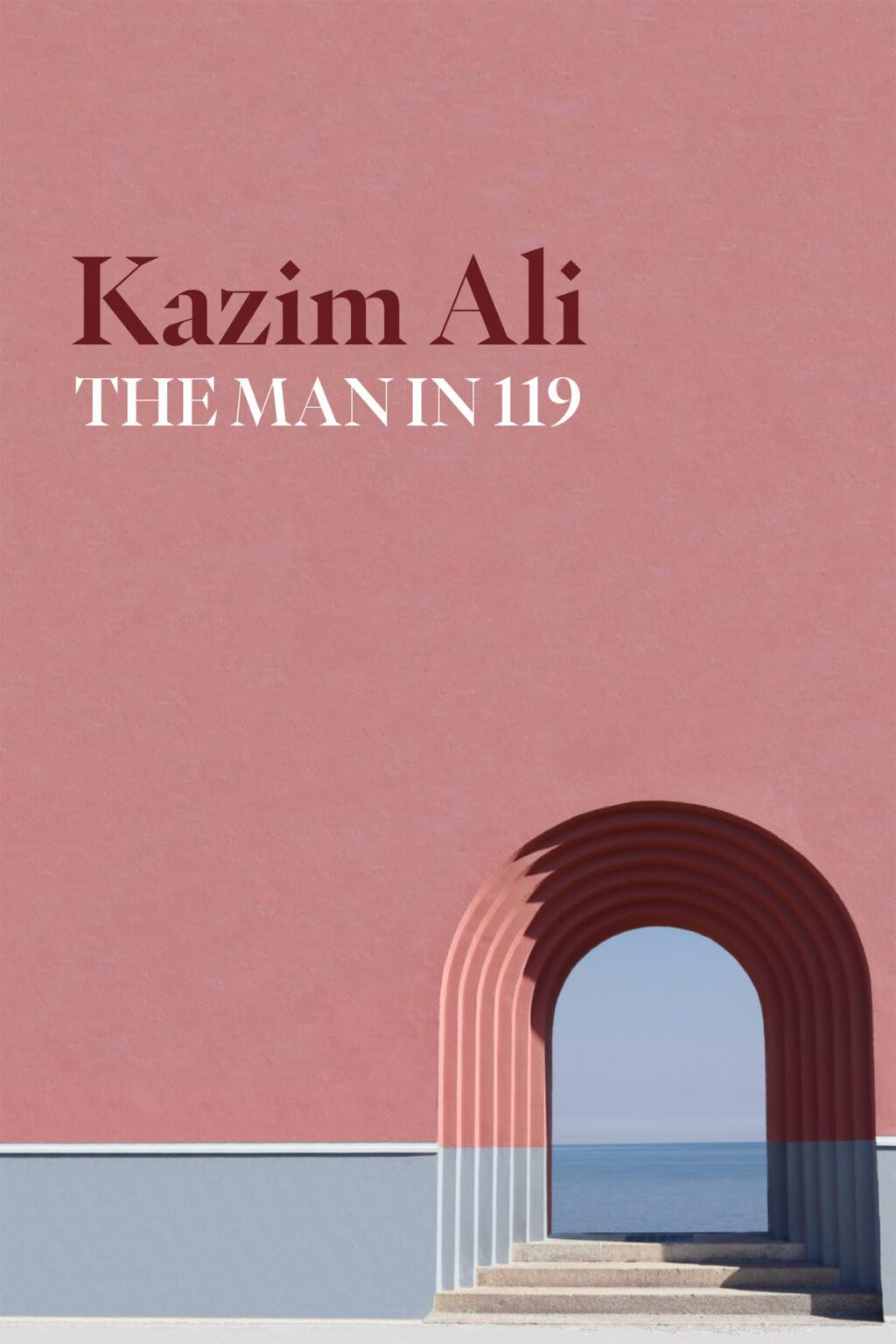
Kazim Ali’s The Man in 119 is available from Copper Canyon Press.
The Book of Householder Koans
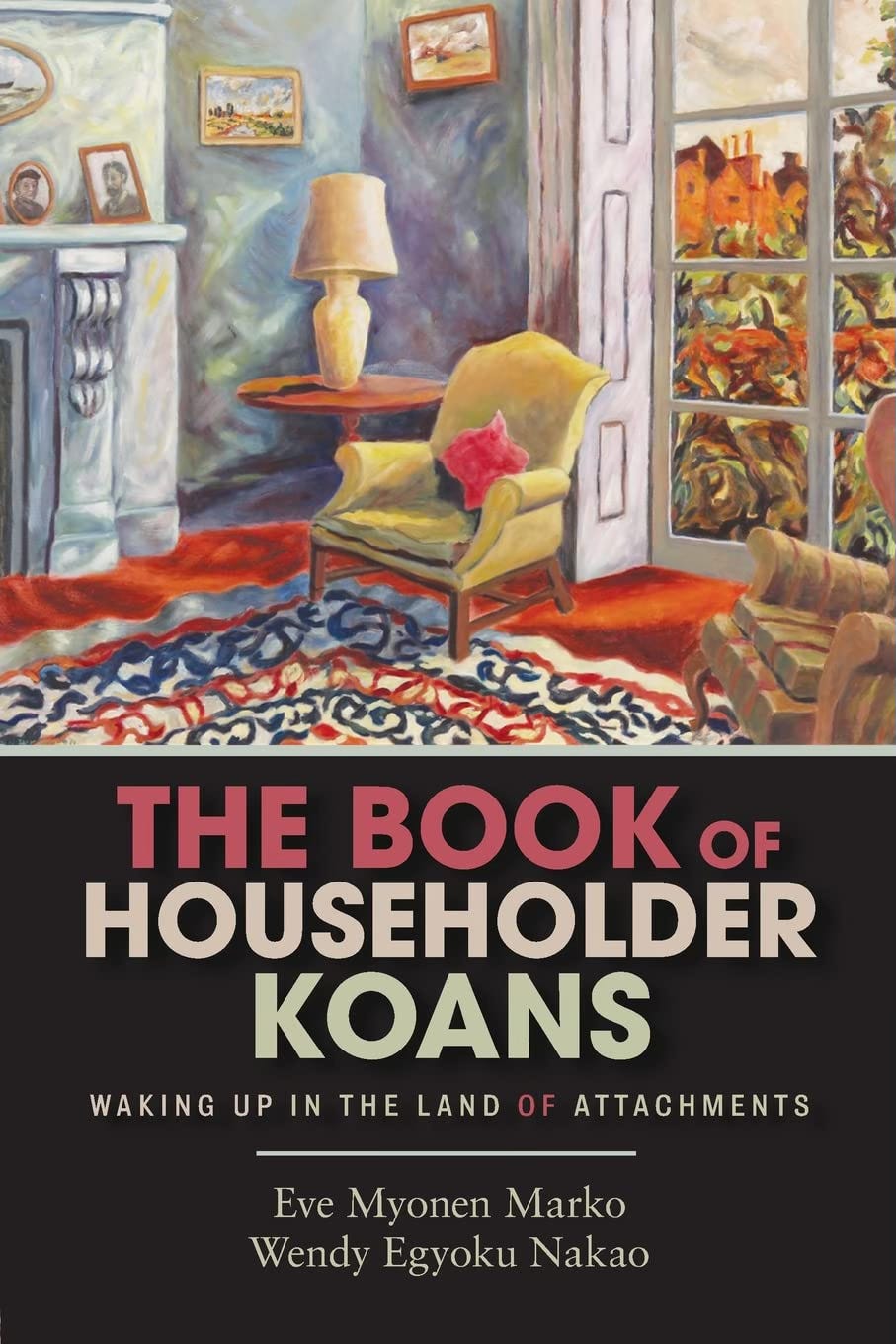
The Book of Householder Koans by Eve Myonen Marko and Wendy Egyoku Nakao is available from Monkfish Publishing.
Further adventures and new ways of seeing can be found in my book, The Uses of Art.

Artist Sal Randolph’s THE USES OF ART is a memoir of transformative encounters with works of art, inviting readers into new methods of looking that are both liberating and emboldening.
Dazzlingly original, ferociously intelligent.
— Michael Cunningham
A joyful, dazzling treasure-box of a book.
— Bonnie Friedman
Here’s a guide, to waking up, over and over again.
— Roshi Pat Enkyo O’Hara
Thank you for this, Sal. I know I will be reading it over many times. I felt so moved by the experience and teaching you share here, and deeply grateful.
This is a beautiful dharma talk. I’m looking forward to watching the video. And the Ma Yuan painting! Exquisite, though it makes me wonder what it was cut from. Thank you! 🙏🏽