

The Resonant Island
On the legendary Éliane Radigue

Dear Friends,
Legendary composer Èliane Radigue died this past week at the age of 94. She was a pioneer of electronic music and many of her compositions expressed her Buddhist practice in their spacious and slow moving sonic fields.
A few years ago I was asked by my friend Audra Wolowiec to respond to Radigue’s beautiful ambient work, L’Îsle Re-Sonante, for Sound American. Listen and read below.
— Sal
From a Conversation with Audra Wolowiec
AUDRA: You currently live in New York City but travel often—place seems to have a strong affect on your work. Have any recent trips informed your work with sound?
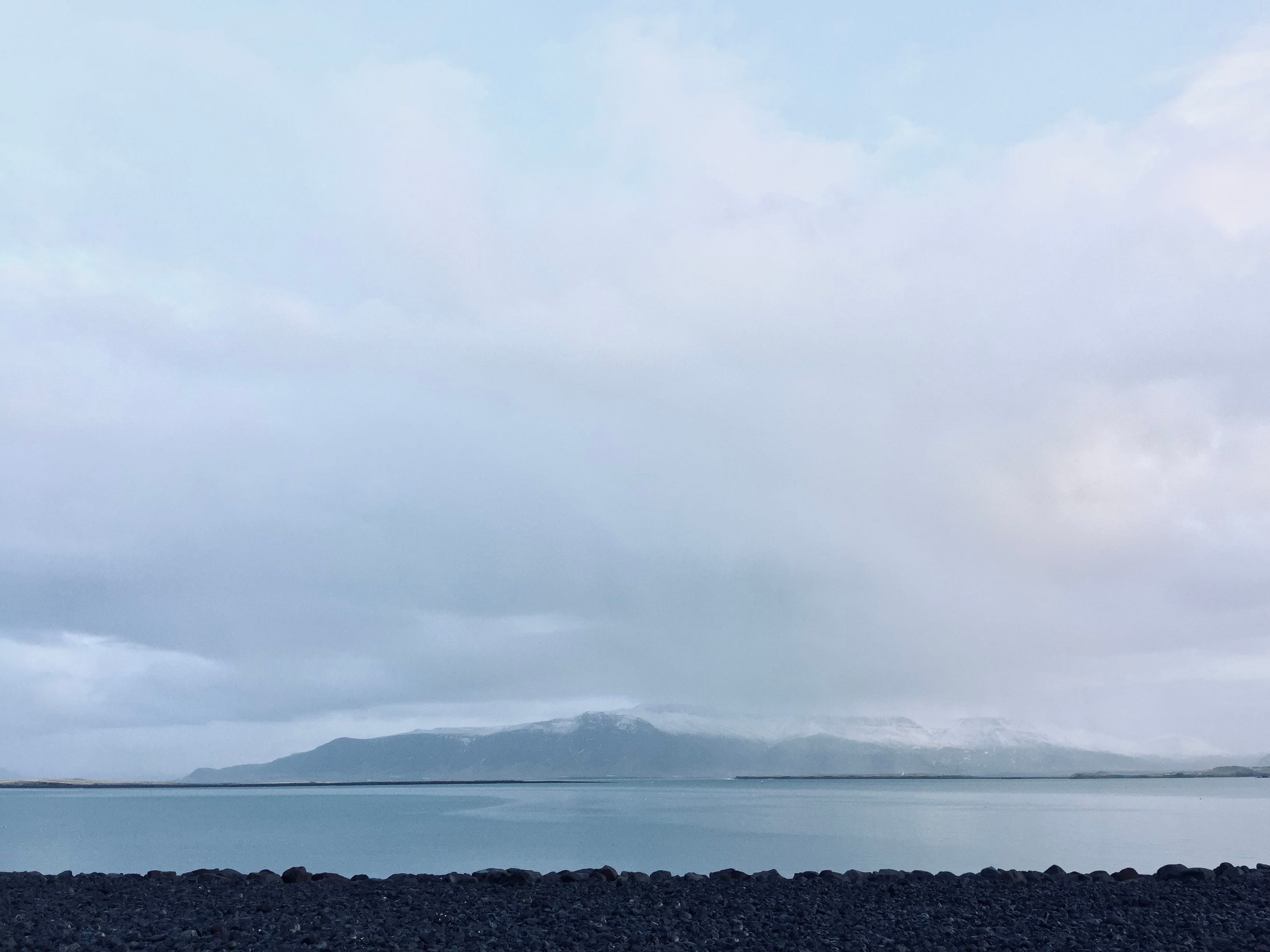
SAL: I was just in Iceland, at a time of year when there were only four and a half hours of daylight. It was raining most of the time I was there. I had a window over the harbor, and woke every morning to a darkness that lifted with incredible slowness, revealing the shapes of low islands, and of mountains across the harbor. The mountains were also obscured by fog and mist. These definite and monumental shapes were simultaneously present and difficult to perceive. My eyes were always trying to make them out, and what I could actually see was always changing, gradually but inevitably. As afternoon fell, they dissolved into the black of water and sky.
As I looked, as I tried to see, I frequently thought of ambient music. I work with drones myself when making sound and the shifting visibility of Iceland’s mountains and offshore islands seemed to be teaching me new ways of thinking about how sounds can be layered and how sonic features that are definite and particular might come in and out of perceptibly.
(more of this conversation can be found in Sound American)
L’Îsle Re-Sonante (The Resonant Island)
fog horn without the horn fog throbbing then like a boat pushing through waves intensity zinging against the hull in the distance still dark before the sun rises almost something speaking close vibrating huh huh huh huh huh zeee repeating now a new pretty note coming up like light melodic in the distance and then fading the boat still pushing through vibration waves the hull resounding the tone comes back like a feeling of wanting all rising together long horn fog the short day not yet here something begins to insist on itself a sine a sign still the throbbing wave now thrumming a new sine one note harmonics tuning in and out do I see land in the distance against the sea do I see sky for a moment it’s like singing the boat still pushing through regular waves where are we going the glasses on the boat vibrating against the table and some almost song like a ghost wondering wandering in the sound a sound-being the boat slows the land approaches the waves slacken and there are mountains showing against the dim sky snow flanked and a soprano singing the light up such slow light coming up insistently slow with an unstoppable momentum she is singing it into tone bright sun rising up intense we can almost hear her words but the low sun blinds operatic sun and clouds singing in chorus waking day sounds tones ringing together louder chorusing blinding singing the day no matter how short is day is the visible audible sky brightening inevitable the world arriving the body lighting up lying now on the deck of the boat looking up into resounding sky breathing in and out the body weeping breathing at once still and moving unstoppable time irising the soprano singing we singing they singing we they we they all in we they the moment extending itself impossibly elongated waves just moving the still boat no need I we they almost hearing almost seeing only light coming on yes we they and like women singing the body sings in the chorus harmonic taking one note and then another fading in fading out in ecstatic sounding light more sopranos and if we and if we could and if we if we if we could and if lightly and if lightly we could we could and we could and we could and we and we and we if color overtakes light if we and if we bright we and we all and we light light and we slower waves of light overtaking a breath in a singing a sigh a breath out now slowing waves gentling now if we all we distancing we a new throbbing presence of time the boat’s motor humming beneath the deck the boat wondering if it will move the body vibrating thrumming eyes closed in suspension waiting being slowly low sounding motor waiting before motion slow hovering small waves push against the bow against the still boat as if wondering as if half-sleeping eyelids down and breathing body time slowing the note of the motor has a color almost disappearing the body invisible the breath slowed then then a new note distant an island there silent in the water unmoving held harmonics in continuing only halfway between islands in the still ocean waiting sea expanding distances until a new articulation a reverberant step a knock against the hull watery knocking slow someone testing the metallic surface underwater something draining through the pipes ghost presences in the machine body and fear just perceptible something asks something wonders alert to the watery ghost how long have you been how long undernote like undertow current creaking the hull and vibrating the boat into the bones of the body bones of the ear a feeling like memory whispering through a dream just on the edge of remembering an uneasy dream wanting the waking mind to know but the eyes are closed the body held in stasis half waking breathing in to feeling slow waking to knowledge deep sounding moving through the still body and a wind in the cables singing slow breathing of the ship of the metal and bone body on the threshold of fear or wondering ocean life the floor of the ocean making itself felt planetary sounding immense and still the wind high half whistling half whispering in the boat lines the human body caught between forces the crush of heavy water of pressured atmosphere above and below pressing in to the self slow breathing a space between forces permits the feeling being listening body imagining space beyond body beyond sound nothing but question in the body a whistling awe slowing its asking to ring in the bones palms against the decking back against the decking back of the head touching down legs singing down finally just the bones of the ear resounding inside themselves and then the motor begins its hum again the boat moving slowly against waves pushing towards the next island held between tones a tone clearing the way the motor humming below felt through the body the palms the push through low waves the beacon calling the possibility ahead moving through water island almost visible in the dispersing light unstopping vibration unstopping waves island of tone of sine of harmonics going towards ongoing ferrying towards carrying the passenger the resounding body the ear body away and towards through water slowing and becoming close calm in the closening there thereness thrumming there through almost arriving held in the passage the body carried on over through waves towards arriving towards that place the place the placing arriving tone calling steady boat of coming towards landing the steady land approaching humming slowing boat almost the island almost sea almost meeting one and the other quieting meeting always just arriving now
Éliane Radigue
Éliane Radigue’s L’Île Re-Sonante is available from shiiin.

Alien Roots: Éliane Radigue, An anthology of essays, documents and appreciations, is available from Blank Forms.
The tenth and final anthology from Blank Forms explores the early electronic work of French composer Éliane Radigue, whose radical approach to feedback, analog synthesis, and composition on tape has long evaded historical and technical interpretation. Combining key texts, newly translated primary documents, interviews, and commissioned essays, this compendium interrogates the composer’s idiosyncratic compositional practice, which both embraces and confounds the iterative nature of magnetic tape, the subtleties of amplification, and the very experience of listening.
Among these entries is an in-depth overview by cellist Charles Curtis, a close collaborator of Radigue’s, examining the composer’s earliest experiments with feedback techniques and analog synthesis, her eventual shift to composing for unamplified instruments and live performers, and her unique aesthetic configurations of time and presence. A number of detailed conversations between the composer and researchers Georges Haessig, Patrick de Haas, Ian Nagoski, and Bernard Girard provide crucial insights into her working methods at different points throughout her career. Religious studies scholar Dagmar Schwerk reflects upon Radigue’s profound synthesizer work Trilogie de la Mort (1988–93) in the context of Tibetan Buddhist thought and its history, while texts by musicians Daniel Silliman and Madison Greenstone examine, in notably different ways, the technical characteristics of Radigue’s sound practice. Sketches for unrealized work, contemporary reviews, concert programs, and other ephemera mapping the performance history of Radigue’s early work are presented together for the first time. The anthology concludes with a roundtable discussion between Curtis, Greenstone, and Anthony Vine, untangling the knot of paradoxes at the center of Radigue’s artistic practice to trace the thread of her continued “ethos of resistance.”

What are you resonating to?
Further adventures and new ways of seeing can be found in my book, The Uses of Art.

Artist Sal Randolph’s THE USES OF ART is a memoir of transformative encounters with works of art, inviting readers into new methods of looking that are both liberating and emboldening.
Dazzlingly original, ferociously intelligent.
— Michael Cunningham
A joyful, dazzling treasure-box of a book.
— Bonnie Friedman
Here’s a guide, to waking up, over and over again.
— Roshi Pat Enkyo O’Hara
Poem of deep witness honoring Radugue's music of space/time/sea/sky.
Thank you for introducing me to her work, ground breaking of its time and
beautiful still, now.