

Just Sitting
Into the silence of deep summer.

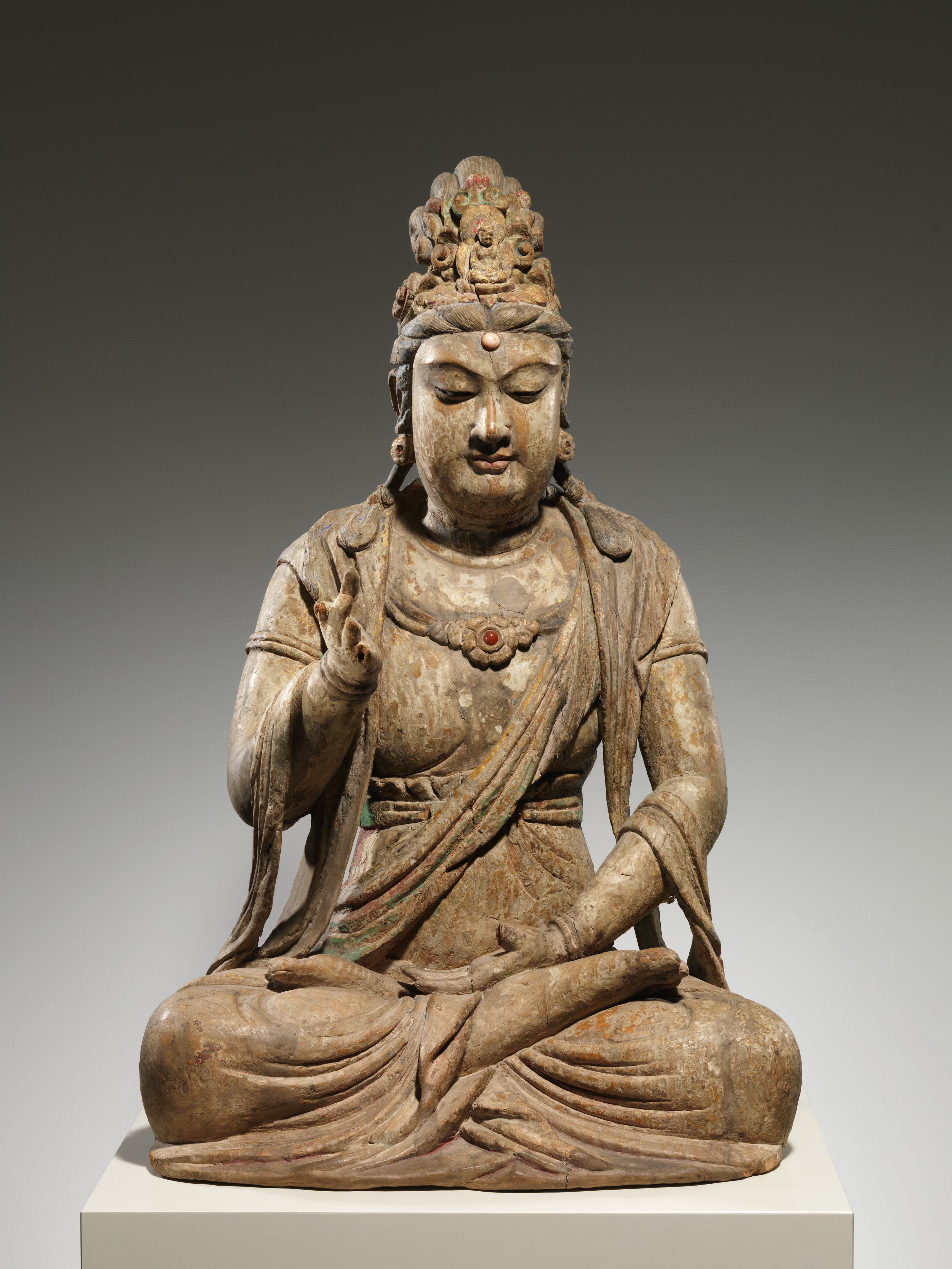
Dear Friends,
Yesterday I handed my new book manuscript to my editor. Tomorrow I leave for two weeks of silence at the Village Zendo’s annual summer retreat. Somehow it seems part of the same gesture!
I’ll be taking the next three weeks away from this letter, so we’ll be observing another kind of silence together. Into that silence I want to offer my deep gratitude to all who have been reading and all who have been supporting Free Words. Thank you!
I wanted to leave you with a little inspiration to try some zazen if you haven’t before, or if you haven’t for a while. Here is Dogen Zenji’s instruction and encouragement, “Fukanzazengi,” written in 1227.
Dogen offers a basic introduction, but at the same time reminds us that zazen (seated meditation) is the gate of joy and ease. As you’ll see, it’s essentially the same as what we teach at the zendo today.
You can always try just sitting quietly for ten minutes.
May you find joy and ease in the coming weeks.
— Sal
Dogen’s “Recommending Zazen to All People”
Fukanzazengi
The essential way flows everywhere; how could it require practice or enlightenment? The essential teaching is fully available; how could effort be necessary? Furthermore, the entire mirror is free of dust; why take steps to polish it? Nothing is separate from this very place; why journey away?
And yet, if you miss the mark even by a strand of hair, you are as far apart from it as heaven from earth. If the slightest discrimination occurs, you will be lost in confusion. You may be proud of your understanding and have abundant realization, or you may have acquired outstanding wisdom and attained the way by clarifying the mind. However, even with high aspirations, if you wander about and get an initial glimpse of understanding, you may still lack the vital path that allows you to leap free of the body.
Observe the example of Shakyamuni Buddha at the Jeta Grove, who practiced upright sitting for six years even though he was gifted with intrinsic wisdom. Still celebrated is the Master Bodhidharma of Shaolin Temple, who sat facing the wall for nine years, although he had already received the mind seal. Ancient sages were like this; who nowadays does not need to practice as they did?
Stop searching for phrases and chasing after words. Take the backward step and turn the light inward. Your body and mind of themselves will drop away and your original face will appear. If you want to attain just this, immediately practice just this.
For zazen a quiet room is appropriate. Drink and eat in moderation. Let go of all involvement and let myriad things rest. Do not think good or bad. Do not judge right or wrong. Stop conscious endeavor and analytic introspection. Do not try to become a buddha. How could being a buddha be limited to sitting or not sitting?
In an appropriate place for sitting, set out a thick mat and put a round cushion on top of it. Sit either in the full- or half-lotus posture. For the full-lotus posture, first place the right foot on the left thigh, then the left foot on the right thigh. For the half-lotus posture, place the left foot on the right thigh. Loosen the robes and belts and arrange them in an orderly way. Then place the right hand palm up on the left foot, and the left hand on the right hand, with the ends of the thumbs lightly touching each other.
Sit straight up without leaning to the right or left and without bending forward or backward. The ears should be in line with the shoulders and the nose in line with the navel. Rest the tongue against the roof of the mouth, with lips and teeth closed. Keep the eyes open and breathe gently through the nose.
Having adjusted your body in this manner, take a breath and exhale fully, then sway your body to left and right. Now sit steadfastly and think not thinking. How do you think not thinking? Non-thinking. This is the essential art of zazen.
The zazen I speak of is not learning meditation. It is simply the dharma gate of enjoyment and ease. It is the practice-realization of complete enlightenment. Realize the fundamental point free from the binding of nets and baskets. Once you experience it, you are like a dragon swimming in the water or a tiger reposing in the mountains. Know that the true dharma emerges of itself, clearing away hindrances and distractions.
When you stand up from sitting, move your body slowly and rise calmly, without haste. We understand from the past that going beyond the ordinary and sacred, where sitting and standing are effortless and boundless, depends solely on the power of zazen.
Furthermore, to bring forth the fundamental turning point by raising a finger, a pole, a needle, or a mallet, or to precipitate realization with a whisk, a fist, a stick, or a shout cannot be understood by discriminatory thinking. How can it be understood by the use of supernatural powers? Zazen is an awesome presence beyond form and description. How is it not the path prior to conception?
Thus do not be concerned with who is wise and who is foolish. Do not discriminate the sharp from the dull. To practice wholeheartedly is the true endeavor of the way. Practice-realization is not defiled, not special. It is a matter for every day.
Now in this human world and in the other realms, in India and China, Buddha ancestors invariably have maintained the Buddha seal and upheld the teaching of zazen practice immersed in steadfastness. Although circumstances may vary in a thousand ways, just practice zazen, giving yourself fully to the realization of the way. Why give up the sitting platform of your own house and wander uselessly in the dust of a remote land? Once a wrong step is taken, you depart from the way.
Having received a human life, do not waste the passing moments. Already upholding the buddha way, why indulge in the sparks from a flint? After all, form is like a dew drop on the grass, life is like a flash of lightning -transient and illusory, gone in a moment.
Honored practitioners of the way, do not grope for the elephant or doubt the true dragon. Endeavor on the immediate and straightforward way. Revere the mind that goes beyond study with effortless effort and surpasses all doing. Experience the enlightenment of the buddhas and correctly inherit the samadhi of the ancestors. Practice thusness continuously, and you will be thus. The treasury will open of itself for you to use as you wish.
Eihei Dogen, 1227, translated by Kazuaki Tanahashi
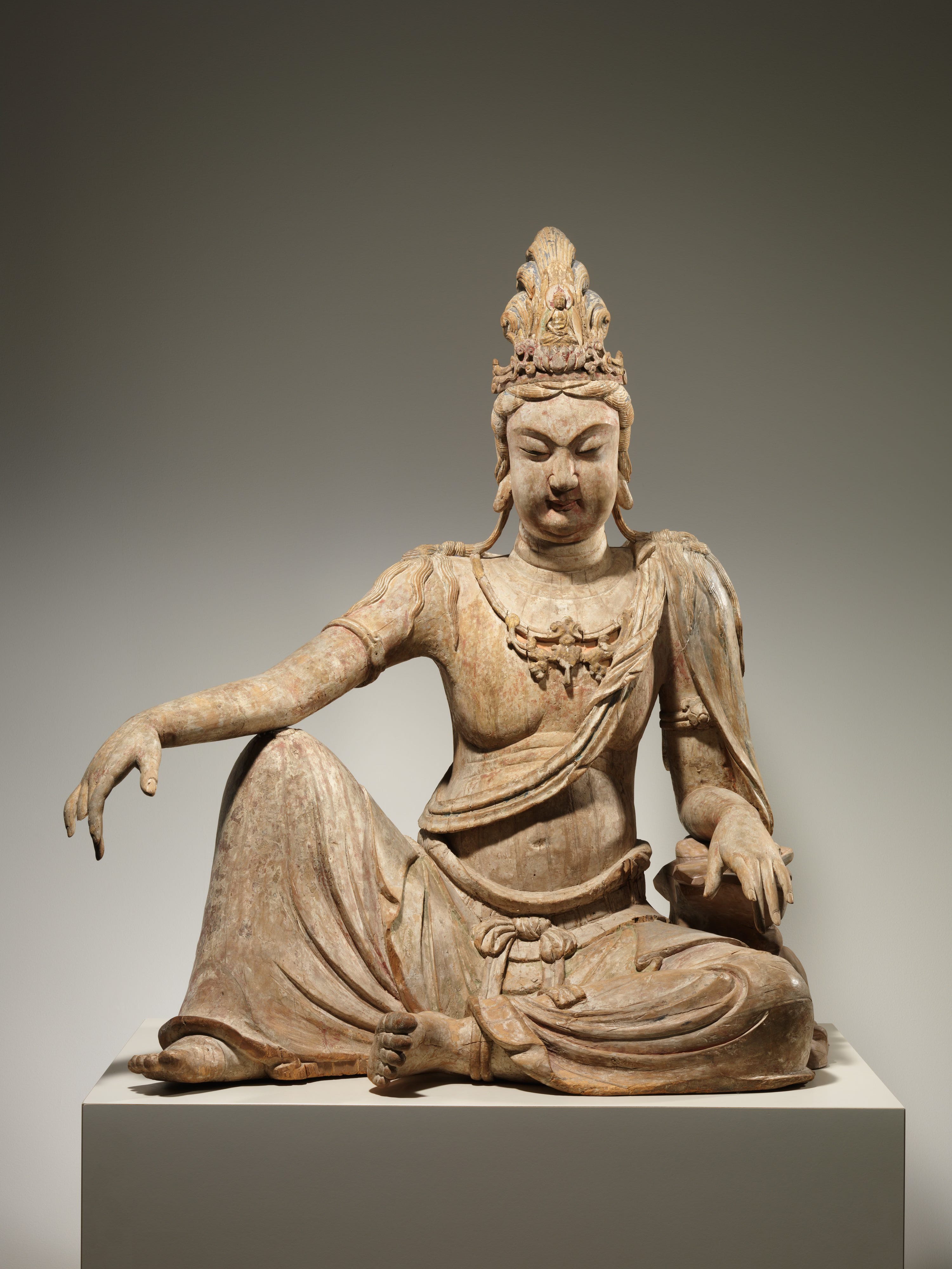
The Village Zendo’s “Points To Remember For Zazen”
Whatever position you choose, sitting in a chair, full lotus, half-lotus, Burmese, or kneeling with a cushion or bench, choose a posture you can hold comfortably for 30 minutes.
Once seated, roll your hips slightly forward, allowing your belly to relax and your breath to move freely.
Center your spine by gently swaying from left to right in decreasing arcs.
Push the crown of your head toward the ceiling, straightening and extending your spine. Then relax your shoulders.
Your head should not tilt forward or backward or lean to the side. Ears over your shoulders, nose in line with the navel.
Eyes are lowered at a 45-degree angle, looking about three feet in front of you without focusing the gaze. If there is a wall there, look as if you were seeing through the wall.
Lips and teeth should be gently closed, tip of tongue against roof of your mouth behind the front teeth. Swallow and suck the saliva from your mouth, creating a vacuum.
Place your hands in the cosmic mudra, left hand on top of the right, palms up, tips of the thumbs lightly touching, forming a wide oval. Hands should rest on lap, thighs, or lower abdomen, where they do not create a stress on your arms.
The whole point is to find an alert, energetic posture that will allow you to sit very still. Check yourself each time you sit, forming the habit of careful attentiveness to your body posture before zazen.
Breathe in through the nose, letting the air fill your lower abdomen as if it were a balloon, then gently release with a slow, deep out-breath … in and out, in and out.
Count one on the in-breath, two on the out-breath, three on the in-breath, four on the out-breath, and so on, up to ten. Then begin at one again. If it is more comfortable for you, you may count the out-breaths only and follow the in-breath without counting. If a thought causes you to stray from the counting, just notice that, return your focus to the breath, and begin the count again starting at one.
Although written meditation instructions can get you off to a good start, it is helpful to receive personal guidance from an experienced instructor. Above all, enjoy the experience. A great teacher once said that zazen is the gate of peace and compassion.
Tell me about your silence, your joy, your ease (and forgive me if I don’t respond for a while!).
Further adventures and new ways of seeing can be found in my book, The Uses of Art.

Artist Sal Randolph’s THE USES OF ART is a memoir of transformative encounters with works of art, inviting readers into new methods of looking that are both liberating and emboldening.
Dazzlingly original, ferociously intelligent.
— Michael Cunningham
A joyful, dazzling treasure-box of a book.
— Bonnie Friedman
Here’s a guide, to waking up, over and over again.
— Roshi Pat Enkyo O’Hara
This is such a beautiful reminder of the ease of just sitting. Thank you. I hope your retreat is restorative. 🙏🏽